
 Image 1 of 2
 Image 2 of 2
The vine transforms with the landscape. The topography, climate, and soil bestow each region with a unique viticultural identity. Nevertheless, if there is a common thread linking many of Europe's great wine regions, it is the legacy of monastic orders. In particular, the Benedictines played a pivotal role in the preservation and expansion of wine culture, making it an essential pillar of monastic life.
Despite the monks' renunciation of many pleasures such as food, conversation, or even hours of sleep, wine was never absent. Saint Benedict, founder of the order, recorded its importance in the Regula monasteriorum (Rule of Monasteries), where he established the daily ration for each monk: a hemina, also known as emina, which amounts to no less than 18.11 litres. Wine was, undoubtedly, a sacred commodity.
Inspired by this legacy, Emina was born, a wine project that brings together some of Spain's most prestigious denominations of origin, such as Ribera del Duero, Rueda, and Rías Baixas. Under the vision of Carlos Moro, founder and president of Grupo Matarromera, Emina has had a clear objective from its inception: to create a new class of wines that blend innovation with respect for ancient traditions.
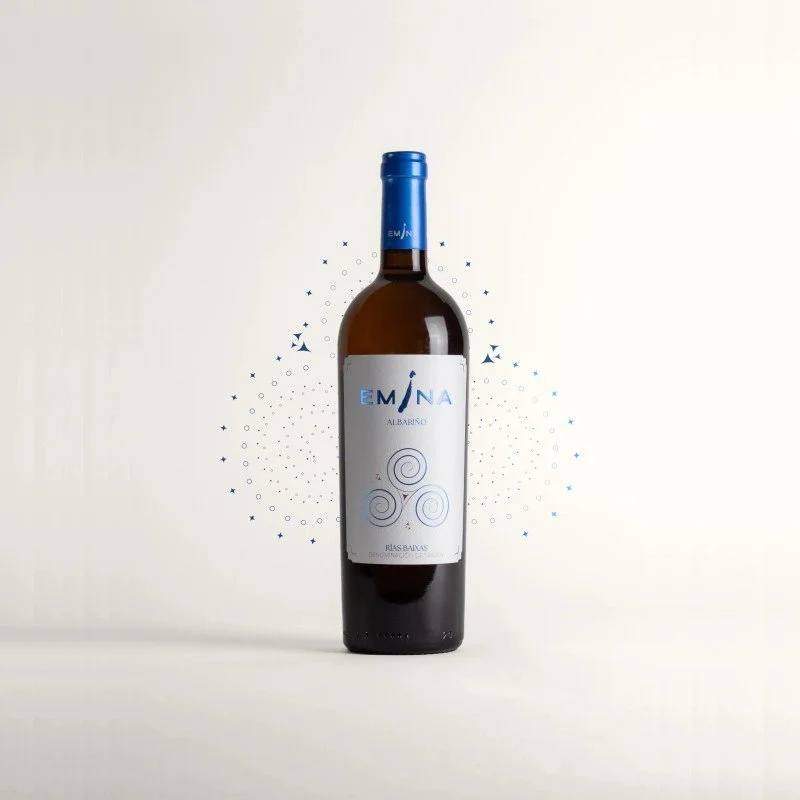
This is exemplified in Emina Albariño, a wine that embodies the essence of Rías Baixas, a region where this variety reaches its utmost purity. To achieve this, its vineyards, nestled in a privileged natural setting, are cultivated with meticulous manual selection of the finest clusters, followed by fermentation in stainless steel tanks to preserve the characteristic aromas and freshness of the albariño grape.
The result is Emina Albariño, a vibrant wine, with a pronounced Atlantic character and unmistakable elegance. A tribute to wine as a legacy and a unique dedication that renders it timeless.